


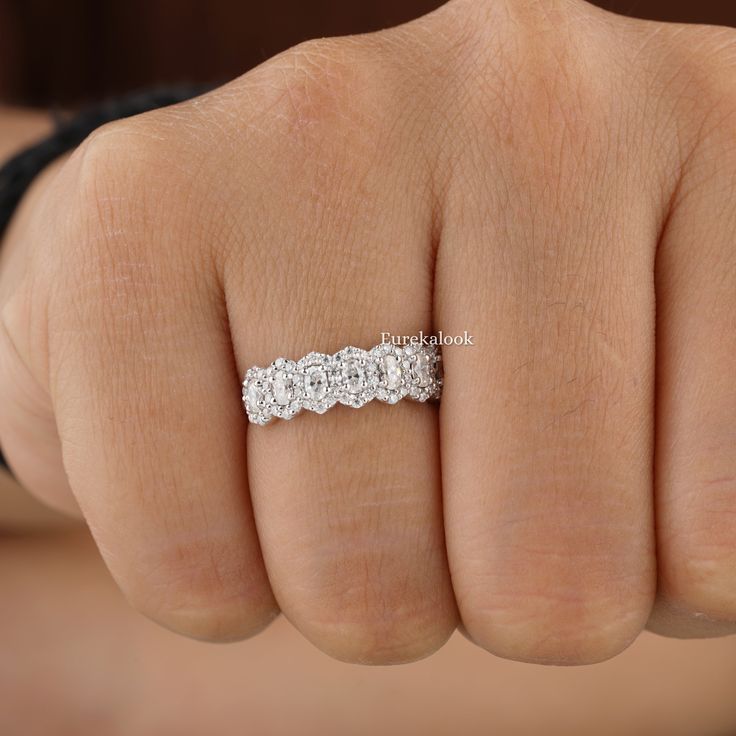
Choosing a wedding band is one of those decisions that feels both deeply personal and quietly permanent. An eternity band, with its continuous circle of stones, carries particular weight: it speaks of unbroken commitment. When the stones in question are moissanite, the choice becomes even more nuanced. Clarity, brilliance, cut, and setting all influence how the finished ring will look and feel on the hand every day.
For those drawn to exceptional fire and ethical provenance without the traditional diamond price, the Lily Arkwrights moissanite eternity wedding ring collection offers a carefully curated range that rewards careful consideration. Understanding the key differences between styles helps ensure the band you choose feels right for decades, not just the wedding day.
Full Eternity Versus Half Eternity
The most fundamental decision is whether stones should travel all the way around the band or only across the upper half. A full eternity design creates an unbroken ribbon of light. It is striking on the finger and photographs beautifully, yet it can prove less practical for everyday wear. Resizing becomes more complex, and the stones on the underside may catch against other rings or fabric.
A half eternity band concentrates the sparkle where it is most visible while leaving the lower portion smooth. This makes the ring more comfortable for those who work with their hands, type frequently, or simply prefer a lower-profile piece. Many wearers find the half style pairs more easily with an engagement ring, allowing the two bands to sit flush without bulk.
Stone Size and Visual Impact
Moissanite’s refractive qualities mean even modest carat weights deliver impressive brilliance. A band set with 1.5 mm or 2 mm stones offers refined sparkle that feels elegant rather than overwhelming. Larger 2.5 mm or 3 mm stones create a bolder statement, catching light more dramatically and reading as more substantial from a distance.
The choice often comes down to lifestyle and preference for subtlety. Those who already wear a substantial engagement ring may favour smaller stones so the overall look remains balanced. Others prefer the eternity band itself to be the focal point and select larger moissanite accordingly. The stone’s hardness ensures either option holds up well to daily wear, provided the setting is secure.
Setting Styles and Metal Choices
Channel settings protect the stones by seating them between two metal walls, reducing the chance of snagging. Prong or claw settings lift the moissanite slightly, maximising light return and creating a more open, airy appearance. Bezel settings offer the greatest security and a sleek contemporary line.
Metal selection further shapes the character of the band. Platinum delivers a cool, enduring white tone that complements the icy brilliance of moissanite. Yellow gold introduces warmth that can soften the overall effect, while rose gold brings a romantic flush. Many designs now offer mixed-metal options or alternative finishes such as brushed or high-polish surfaces, allowing the ring to feel uniquely personal.
Matching to an Engagement Ring
Practical harmony matters. A shared metal colour and complementary stone size usually produce the most cohesive stack. Some couples deliberately contrast finishes—polished against matte, for instance—to create visual interest. Trying the bands together under different lighting conditions reveals how the moissanite interacts with any existing diamonds or gemstones. Comfort is equally important: the combined height and width should still allow free movement of the fingers.
Final Thought
An eternity band is rarely chosen in isolation. It becomes part of the daily landscape of a hand, catching light during ordinary moments as much as special ones. Taking time to weigh full versus half designs, stone proportions, setting security, and metal tone leads to a piece that feels intentional rather than merely decorative. When the right combination is found, the continuous circle of moissanite does exactly what it is meant to do: it endures, quietly and brilliantly, alongside the commitment it represents.
