


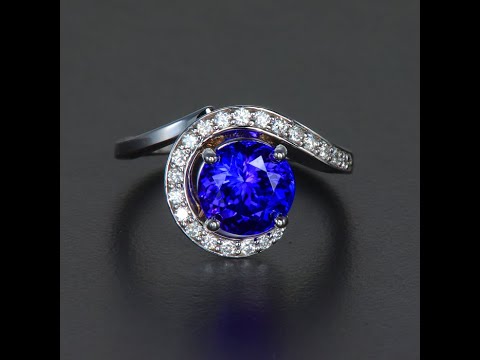
Tanzanite, with its mesmerizing shades of blue and violet, is one of the most sought-after gemstones in the world today. Often referred to as the “blue gemstone of a generation,” its striking colors and rarity make it a prized possession for jewelry enthusiasts. But how does this stunning gemstone go from being extracted from the earth to becoming the beautiful jewelry pieces we adore? Let’s explore the journey of Tanzanite from the mines to masterpieces.
The Birth of Tanzanite: A Gemstone with a Rich History
Tanzanite was discovered in 1967 in the Merelani Hills of northern Tanzania, making it a relatively new gemstone in the world of precious stones. It was named after the country of its origin, and its vibrant colors quickly captivated gemologists and jewelers alike. Tanzanite’s distinct hue is a result of the unique way it reflects light, exhibiting different shades of blue, violet, and even purple depending on the viewing angle.
What makes Tanzanite truly remarkable is its limited geographical source: it is only found in a small area of Tanzania, which makes it one of the rarest gemstones on earth. This rarity has increased its desirability, and it has become a highly coveted stone in the jewelry market.
The Journey from Mines to Masterpieces: The Mining Process
Tanzanite mining is a labor-intensive and dangerous process, often carried out in small-scale operations. The mines are located in the Merelani region, a rugged and challenging landscape that requires skilled miners to extract the gemstone. Tanzanite occurs in veins, which are carefully dug out from the earth. Miners use both traditional hand tools and modern machinery to locate and extract the stones.
The gemstones themselves are embedded in a matrix of surrounding rock, which means that each Tanzanite crystal must be carefully extracted to avoid damaging the delicate stone. The mining process can be grueling, and miners are often working under difficult conditions to retrieve these precious gems.
Once the raw stones are extracted, they are transported to cutting and processing facilities where the true transformation begins.
Cutting and Shaping Tanzanite: The Art of Transformation
From raw stone to jewelry masterpiece, cutting Tanzanite is a delicate art. Because Tanzanite is typically found in rough, uncut forms, the skill of the lapidary (gem cutter) is paramount in enhancing the gemstone’s natural beauty. The process of cutting Tanzanite involves carefully analyzing the stone’s color, clarity, and structure to decide on the optimal cut.
The gem is typically cut in a variety of shapes, including round, cushion, emerald, and oval, with each shape designed to bring out the unique color play of the stone. The most valuable Tanzanite gemstones are those with a deep, rich blue color, often combined with a hint of purple. The cutter’s goal is to retain the gemstone’s vibrant hues and create a piece that reflects light in the most spectacular way.
Once cut, Tanzanite gemstones are polished to perfection, enhancing their brilliance and bringing out their full color spectrum. The result is a gemstone that radiates beauty and elegance, ready to be set into a piece of jewelry.
Designing Tanzanite Jewelry: Crafting Timeless Elegance
After the cutting and polishing process, the gemstone is ready to be transformed into jewelry. Tanzanite is commonly set in fine jewelry, including rings, necklaces, earrings, and bracelets. Designers carefully select the right metal—such as platinum, white gold, or yellow gold—to complement the vivid colors of Tanzanite.
The versatility of Tanzanite makes it a perfect choice for various styles of jewelry, from classic solitaires to more intricate designs. One of the most popular designs is the Tanzanite halo ring, where the gemstone is surrounded by smaller diamonds or sapphires to accentuate its color. Other pieces include elegant drop earrings and statement necklaces, where Tanzanite takes center stage.
What sets tanzanite jewelry apart is its ability to change its hue depending on the light and the angle from which it is viewed. This captivating color shift makes Tanzanite a stone that never loses its allure, adding a layer of mystique and charm to any jewelry piece.
The Rarity and Value of Tanzanite
Tanzanite’s rarity and the complexities involved in its mining, cutting, and crafting contribute to its high value in the jewelry market. Because it is only found in a limited region of Tanzania, its supply is finite, which increases its desirability over time. The price of Tanzanite jewelry can vary widely depending on factors such as the size, cut, and color quality of the gemstone.
Jewelry made with Tanzanite is often considered an investment, with many collectors choosing to purchase pieces not only for their beauty but also for their potential to appreciate in value. The limited availability of Tanzanite makes it a timeless treasure, and each piece of jewelry created from this gemstone is a unique masterpiece.
Conclusion: From Mines to Masterpieces
The journey of Tanzanite—from its humble beginnings in the mines of Tanzania to its transformation into stunning works of art—illustrates the remarkable craftsmanship that goes into creating Tanzanite jewelry. As one of the most prized gemstones in the world, Tanzanite continues to captivate the hearts of those who appreciate its natural beauty, rarity, and the artistry behind its transformation.
